
Husker-Net COTS Track
Live commercial 5G network across campus, farm, and mobile sites
Husker-Net is a multi-campus private 5G network at the University of Nebraska–Lincoln, supported by the NSF Campus Cyberinfrastructure (CC*) program.
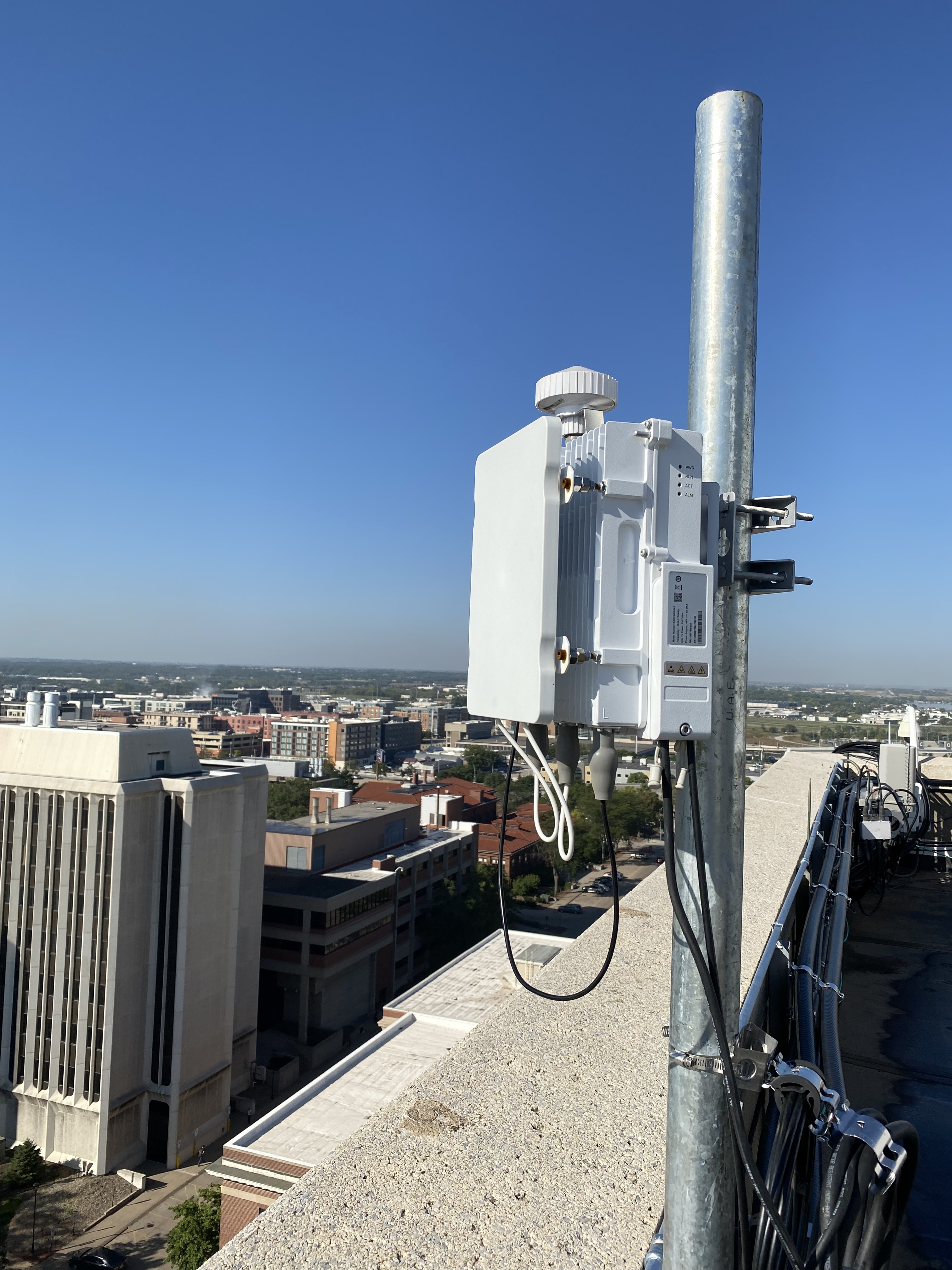
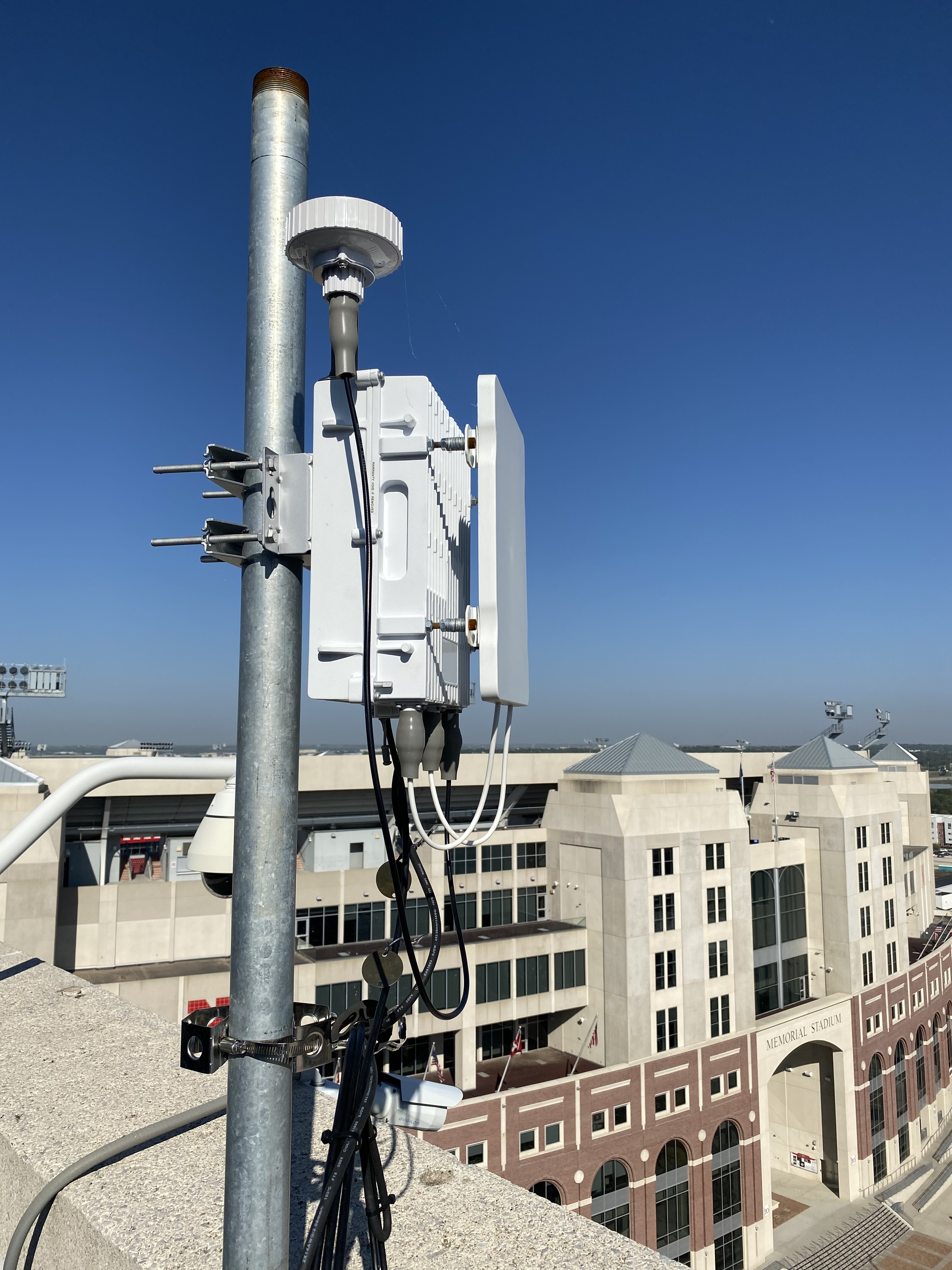
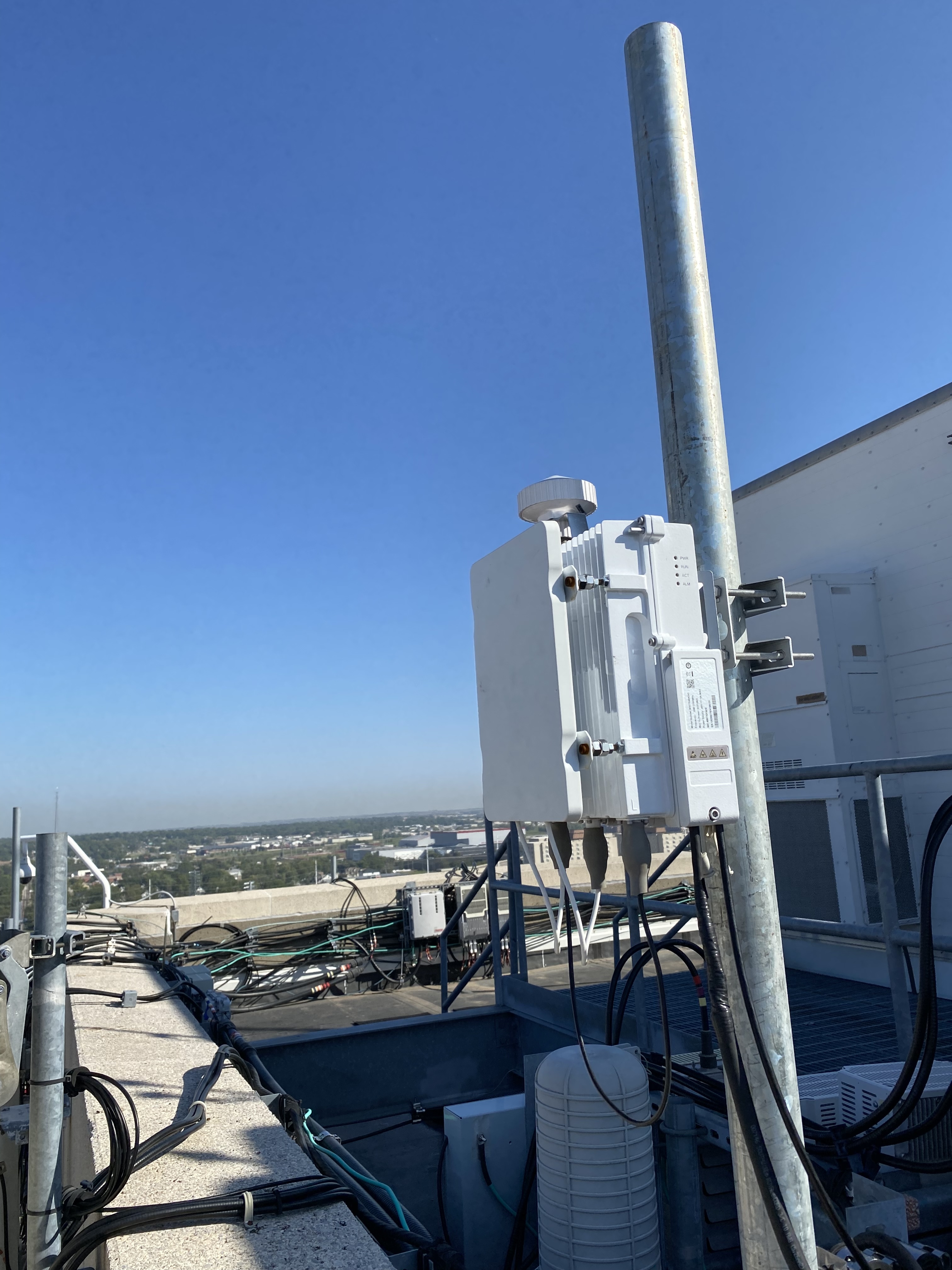
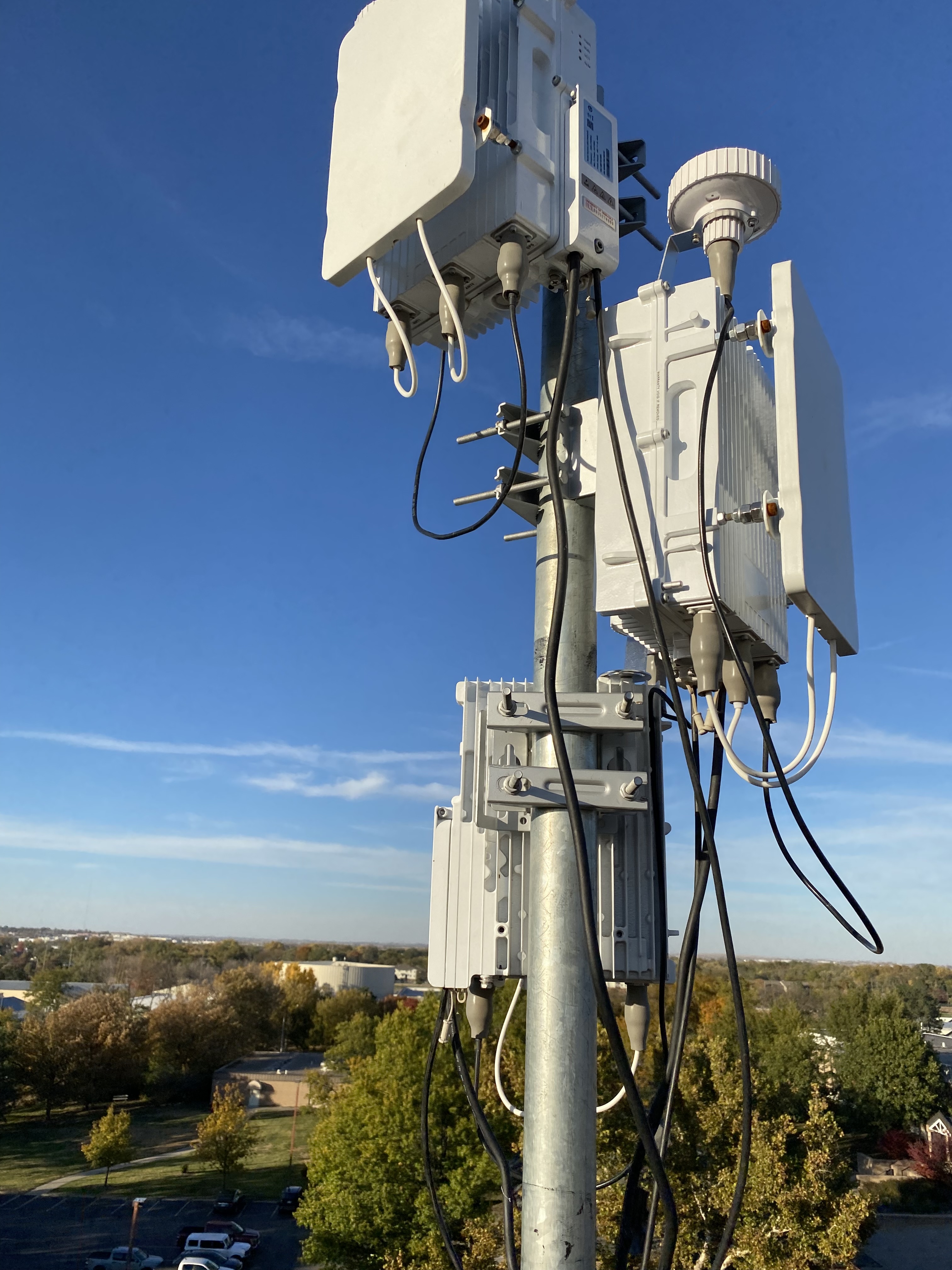
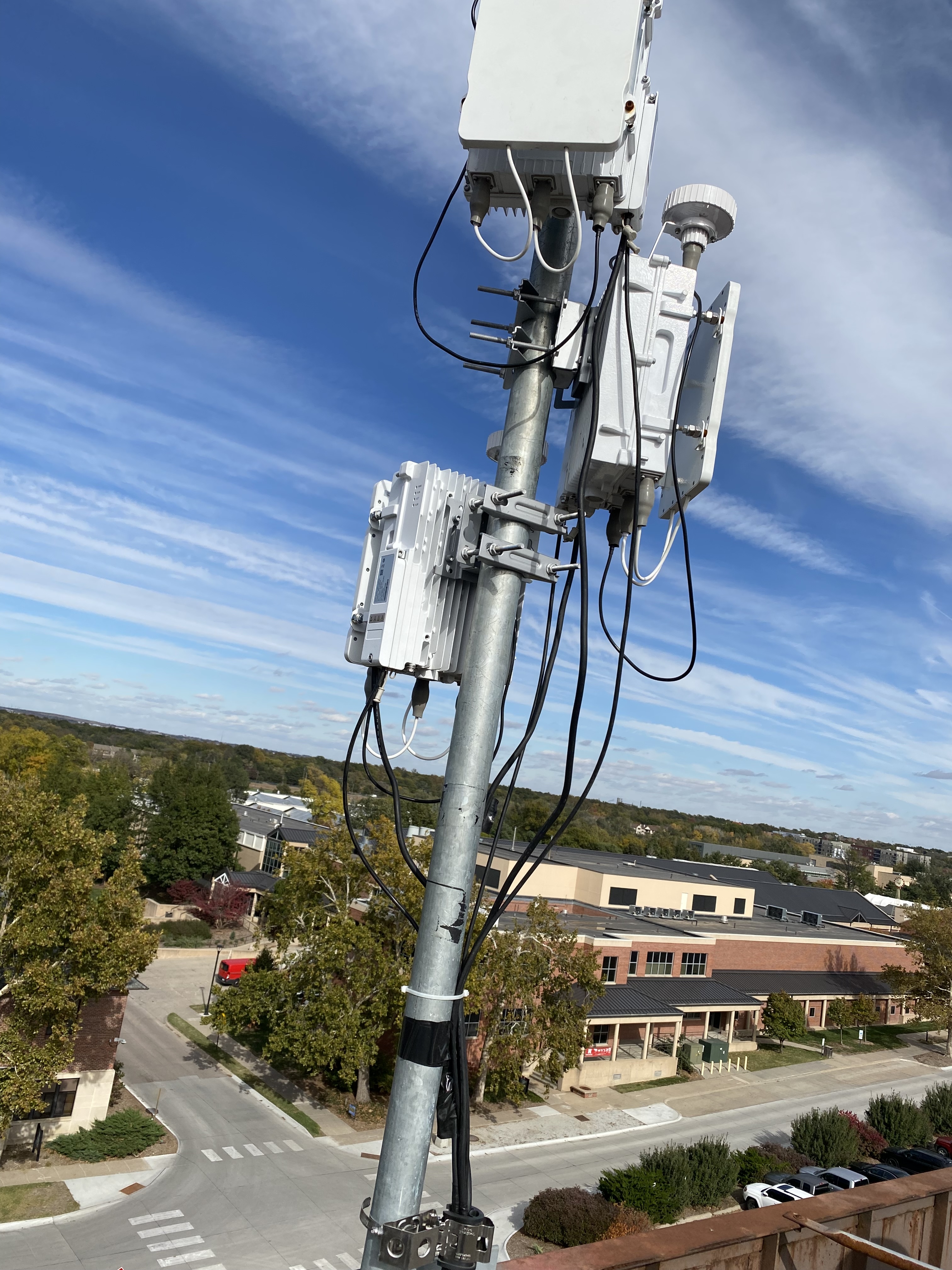
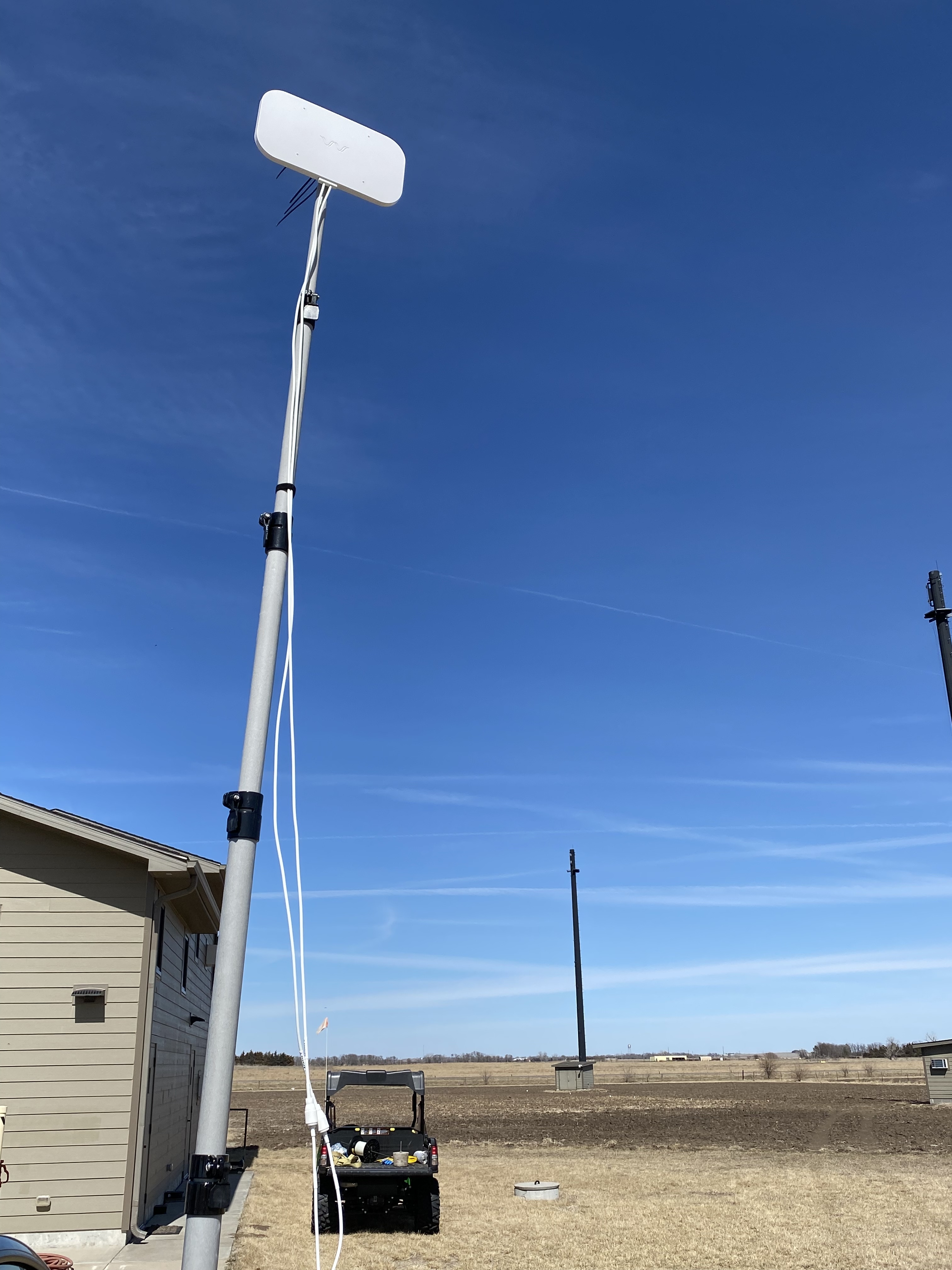
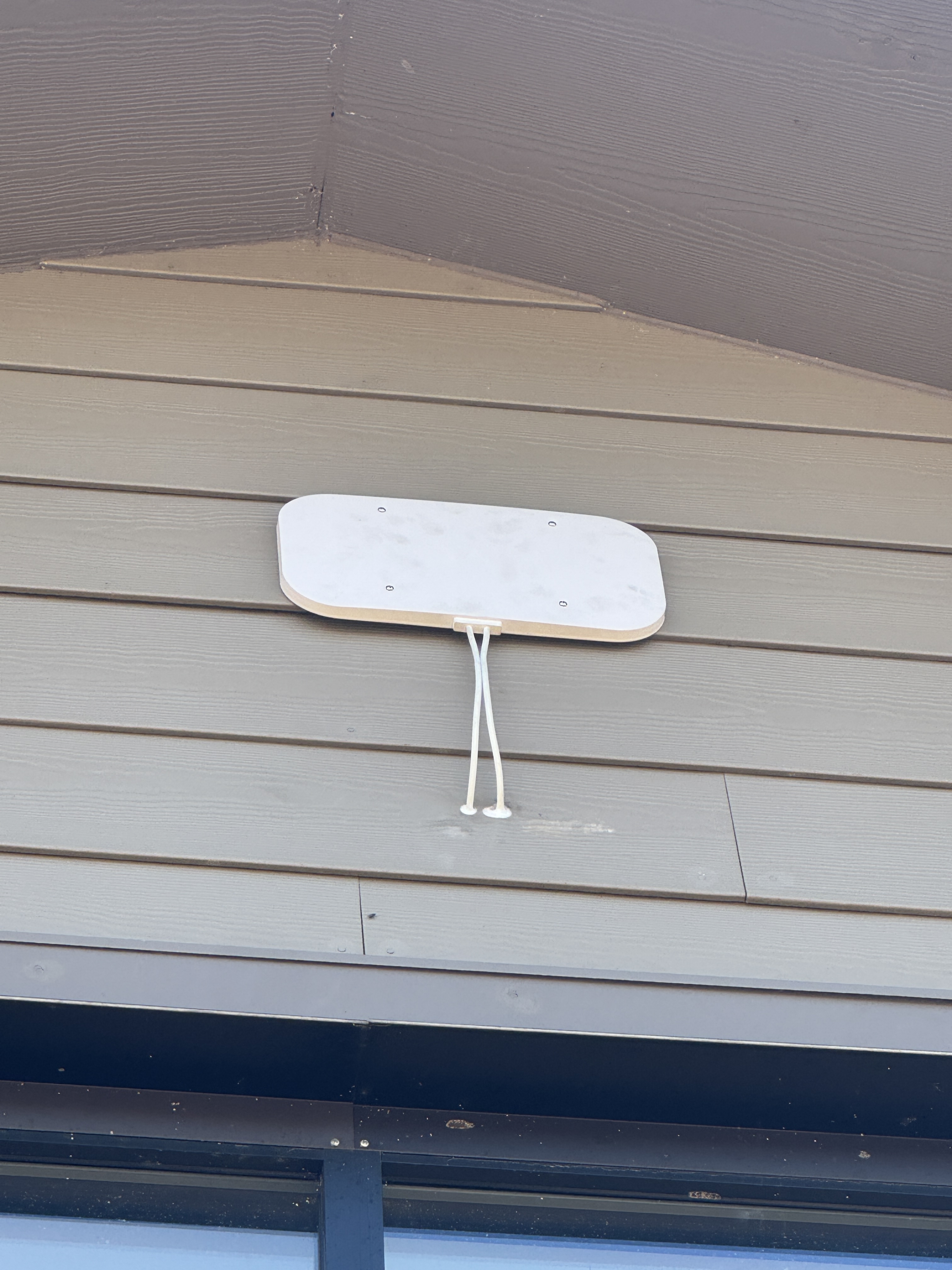
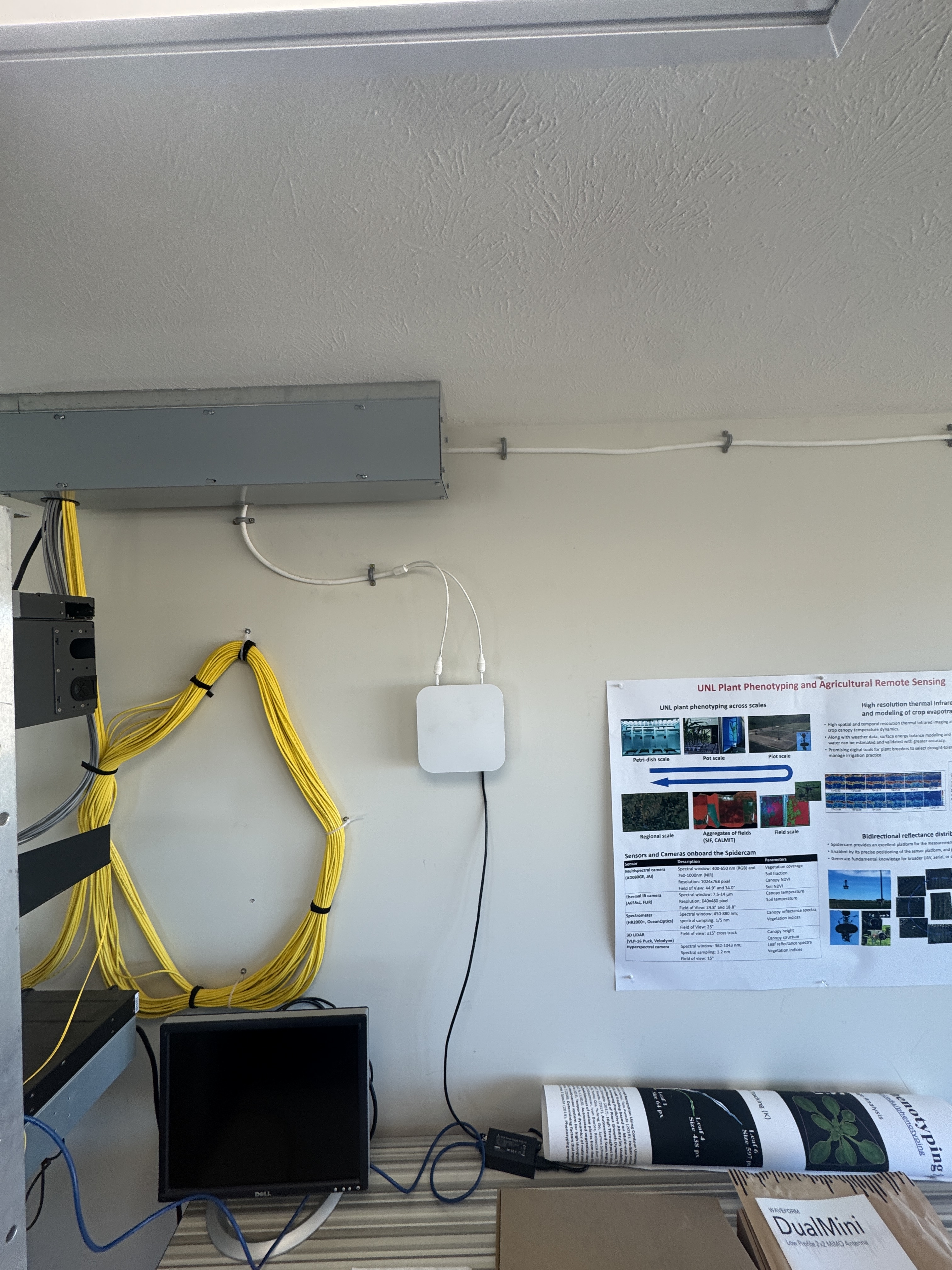
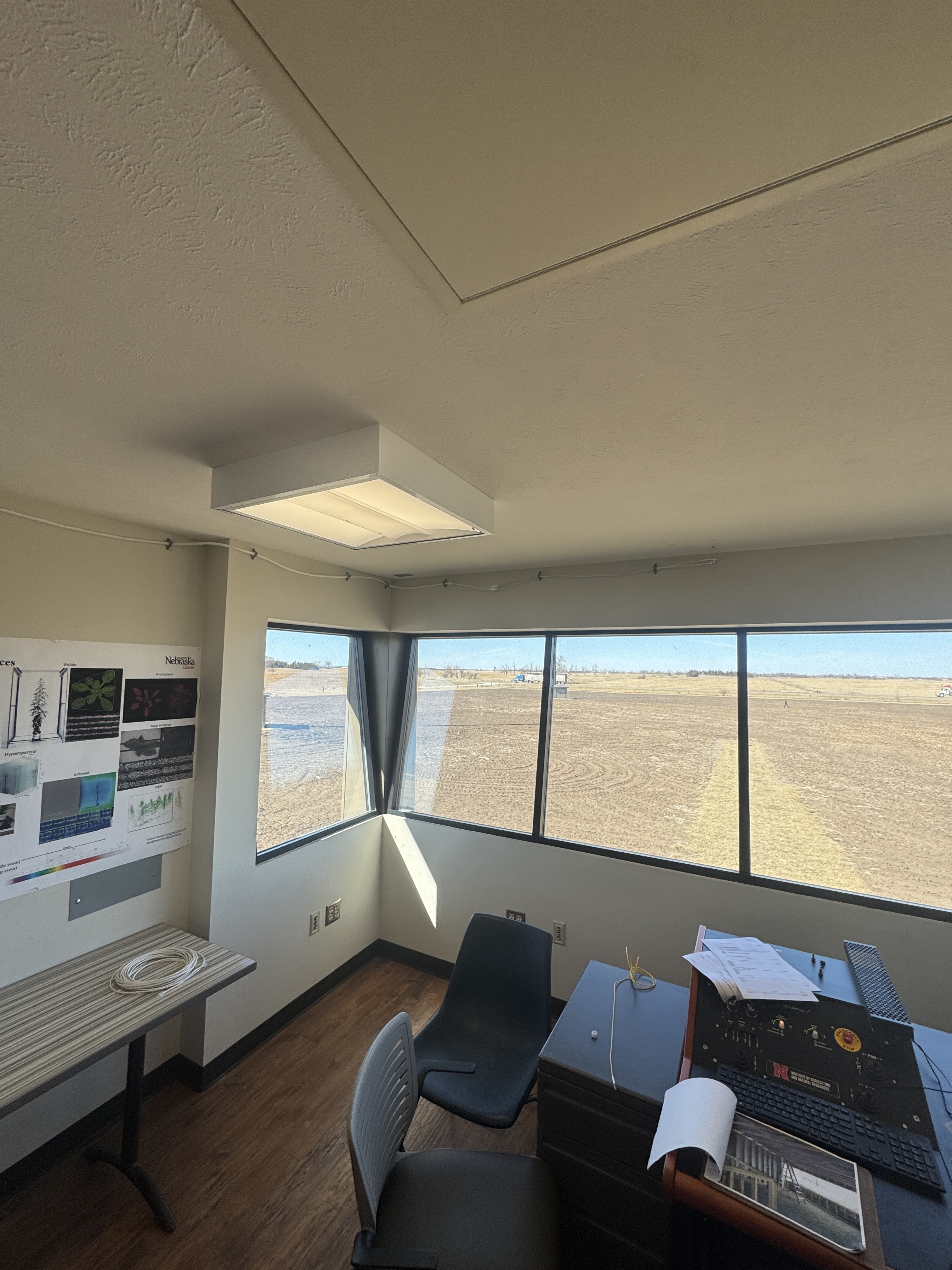
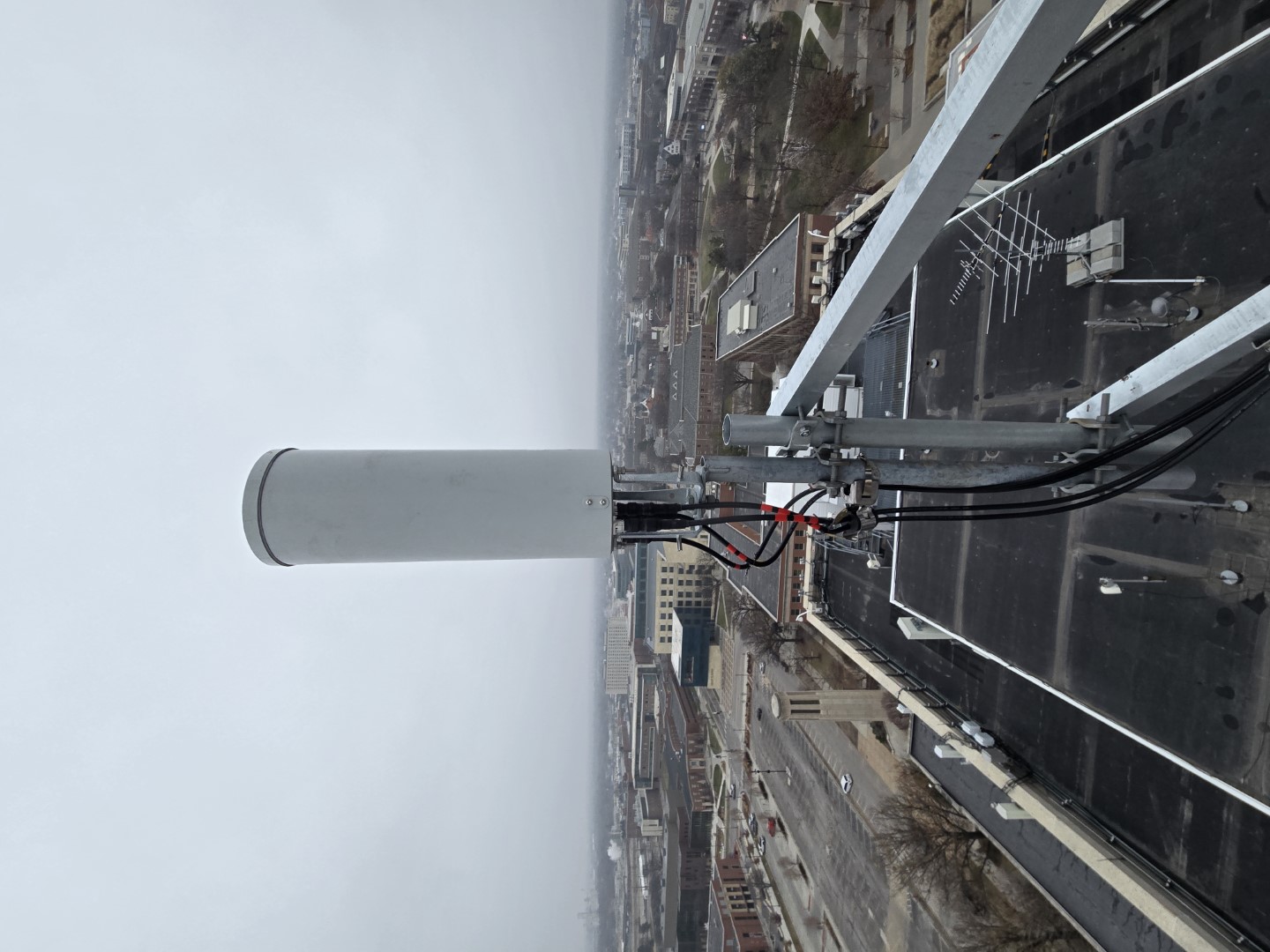
The COTS track includes three fixed sites: one on the City campus, one on the East campus, and one at the UNL Spidercam field phenotyping facility. The campus sites each have three sectors with a commercial base station (20 W TX, CBRS band), and the COTS track aims to provide hundreds of Mbps downlink and uplink throughput at 24/7. The farm site serves a one-acre field with an automated cable-suspended carrier system that positions multiple cameras and sensors (RGB, near-infrared, lidar, and multispectral) over individual plots for plant imaging.
A portable mobile site extends coverage on demand, especially in rural areas. It uses a small-cell radio (27 dBm max TX) with an omni-directional antenna, powered by an Anker 10,000 mAh power bank and a 100 W peak solar panel, and backhauled to the Internet via Starlink.
The core network is implemented with open-source 5G core (5GC) projects (e.g., Open5GS) on a Dell PowerEdge R650 rack server. Husker-Net has multiple 5G smartphones, Quectel RM520N-GL 5G modems, and CPEs as mobile users.
Husker-Net SDR Track
Software-defined radio sites, outdoor and indoor
Husker-Net is a multi-campus private 5G network at the University of Nebraska–Lincoln, supported by the NSF Campus Cyberinfrastructure (CC*) program.
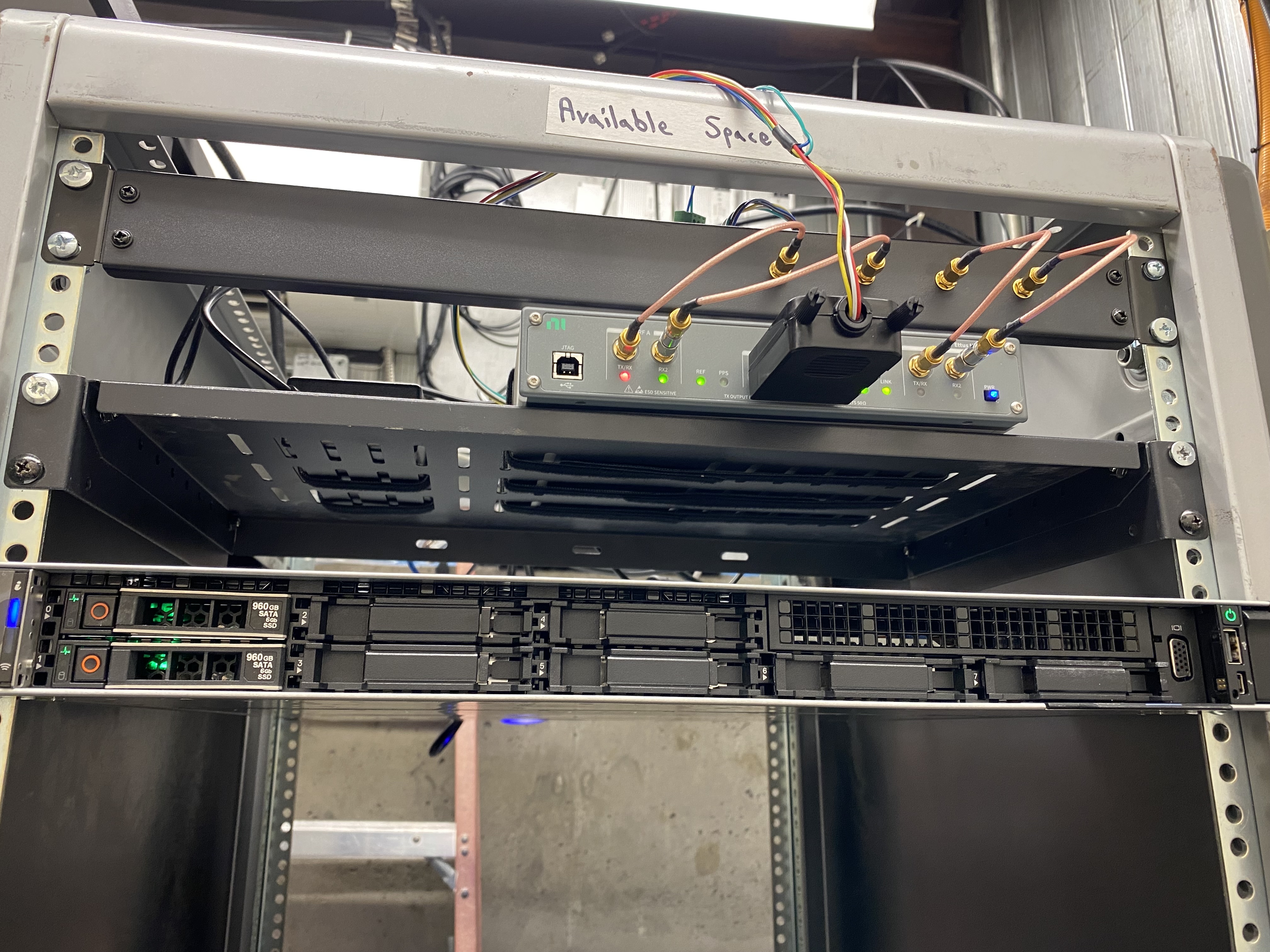
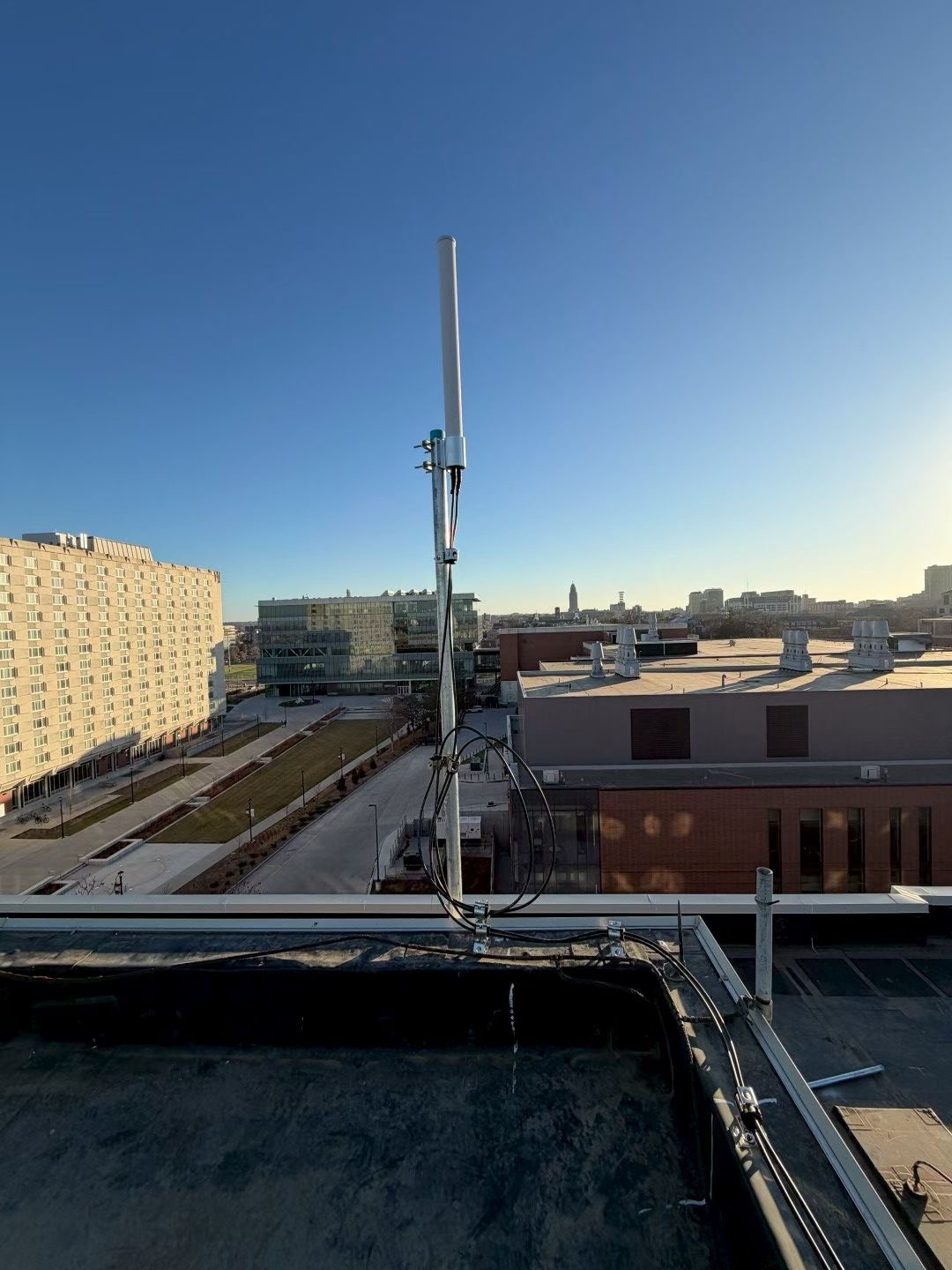
The SDR track includes three sites with SDR boards (e.g., Ettus X300 with UBX daughterboards) and omni-directional antennas (CommScope UU-360S-F) to enable a wide range of wireless communication and networking experiments between 1.2 GHz and 6 GHz in real-world fields. A power amplifier with a maximum 46 dB gain and 20 W output is connected to each SDR board to amplify transmission power.
Each SDR site hosts a Dell PowerEdge R650 rack server running open-source RAN projects such as OpenAirInterface RAN and srsRAN.
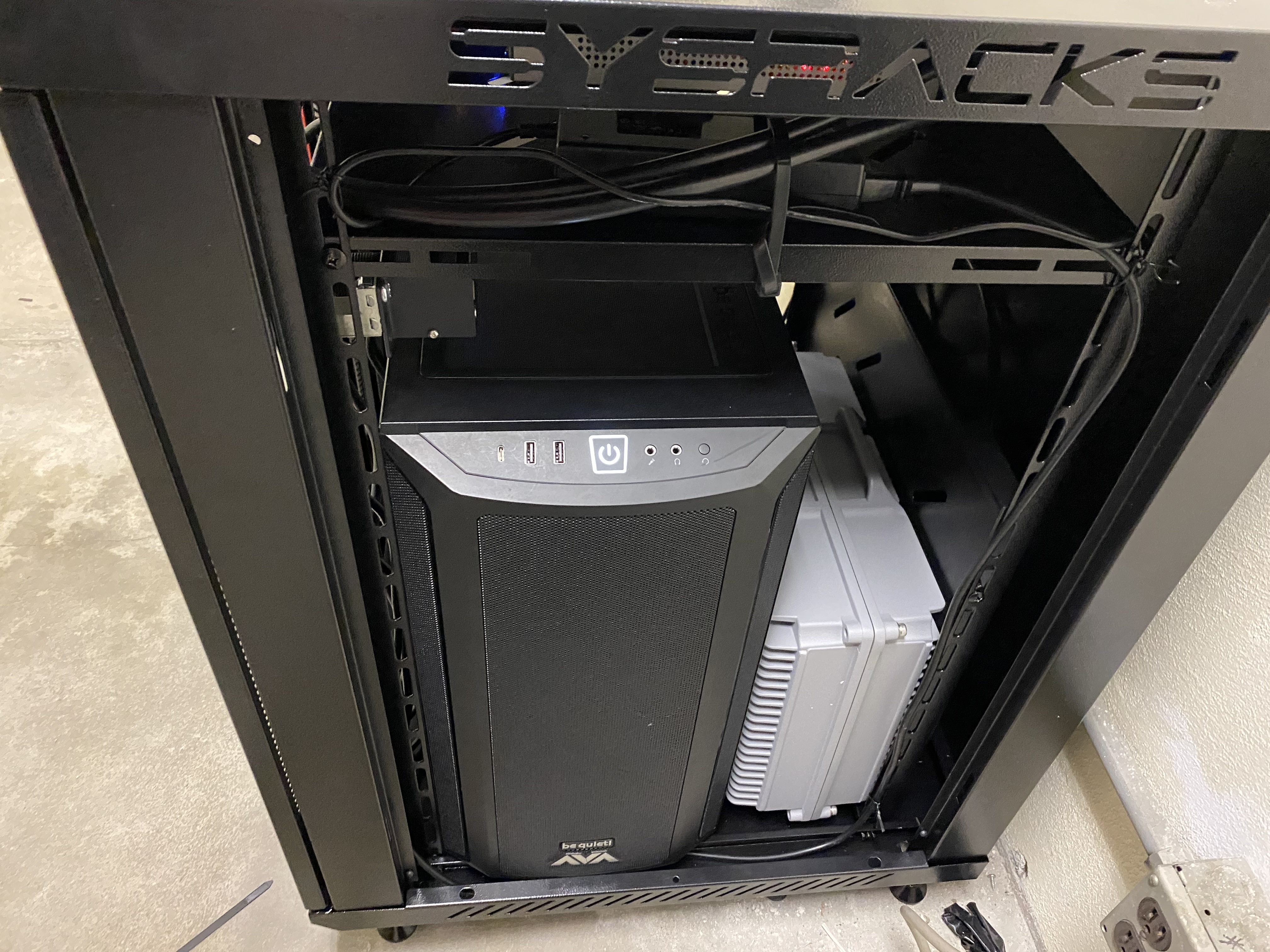
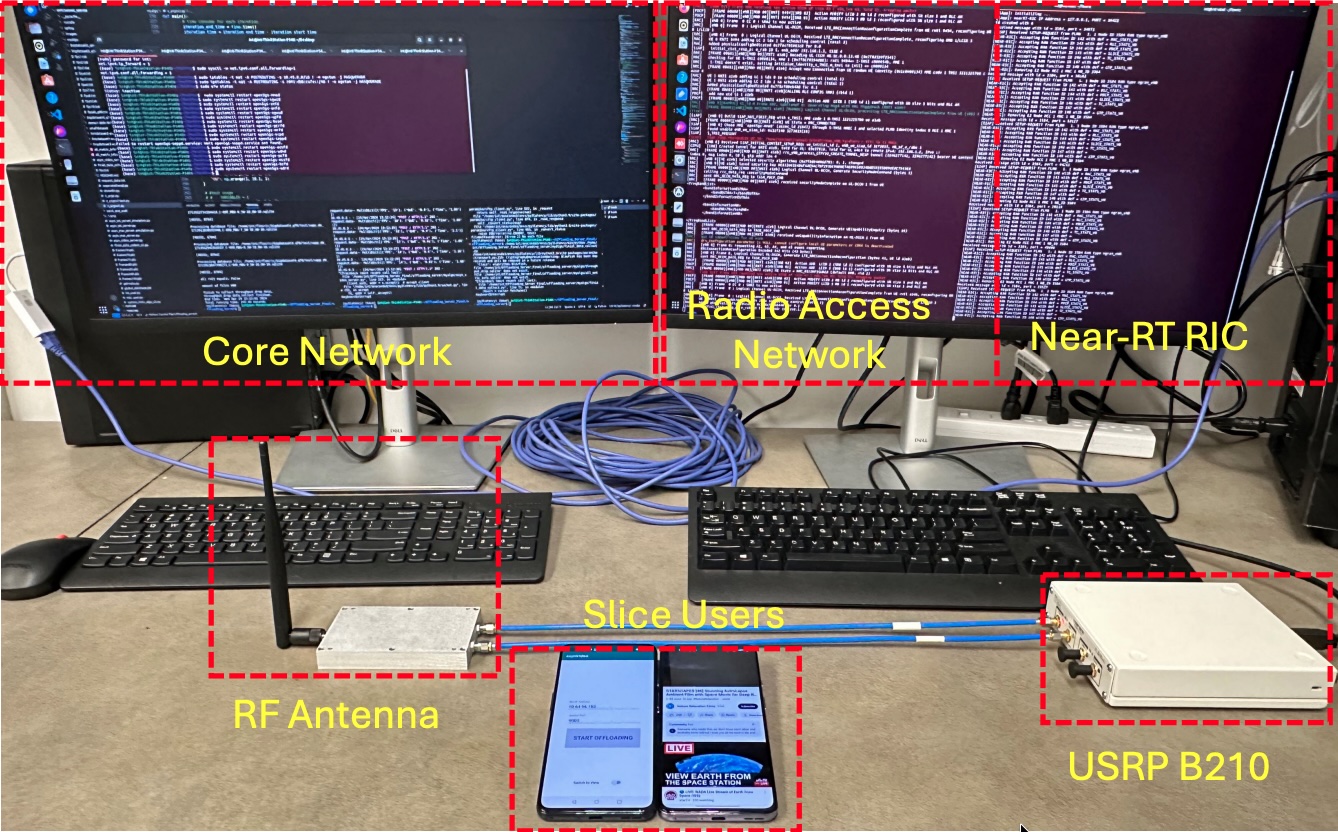
The indoor testbed uses Ettus B210s and workstations and NVIDIA DGX Spark, with the capability of network slicing experiments under the emerging architecture of O-RAN and AI-RAN.
Autonomous Driving Platform
Four-wheel differential drive robotic vehicle
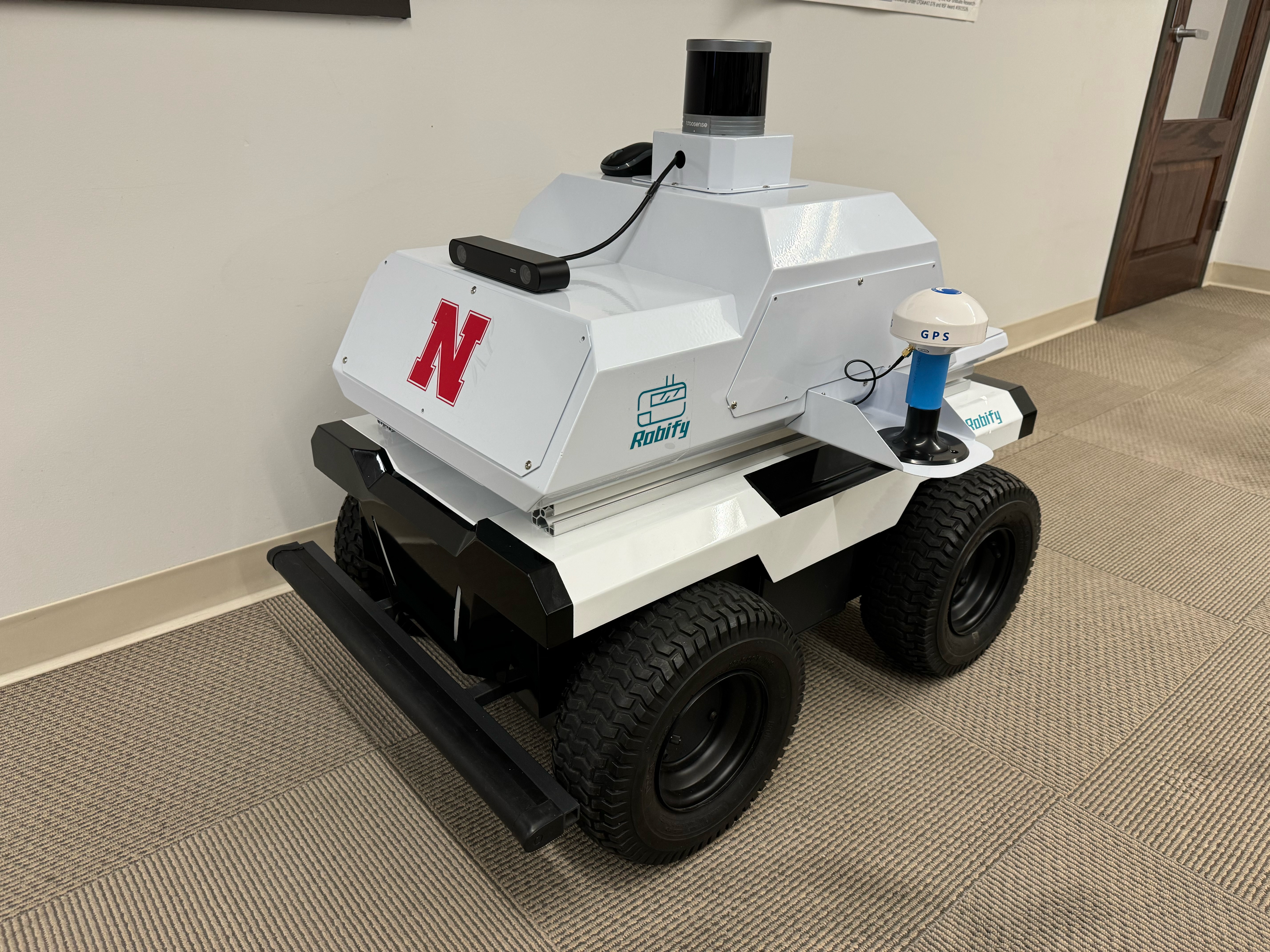
Hippo is a compact four-wheel differential drive robotic vehicle for various autonomous driving experiments, with an onboard computer with an Intel i7 CPU and an NVIDIA GTX 1650 GPU.
It also includes a wide range of sensors and actuators, such as RoboSense 32-thread LiDAR, RTK GPS kit, and high-accuracy IMU.
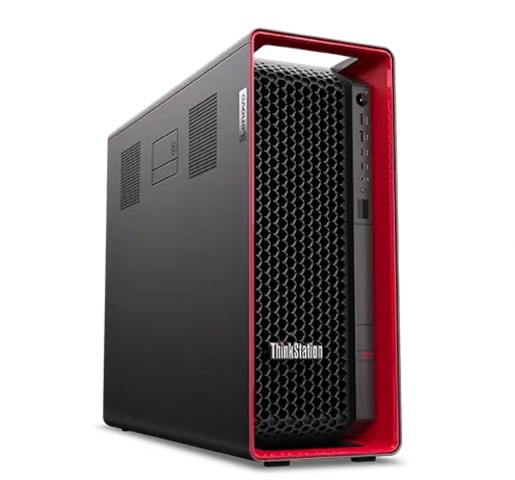
In addition, we have a high-end Lenovo P8 workstation with an AMD Threadripper 7955WX CPU, 128 GB RAM, and two NVIDIA RTX PRO 6000 (96 GB) GPUs, which can be used for training and testing advanced AI models.
Embodied AI Platform: AgileX Piper
Dual robotic arms with wrist and central cameras
The embodied AI platform consists of two AgileX PiPER robotic arms. Each arm carries a wrist-mounted camera, and a central camera provides a shared view of the workspace, enabling bimanual manipulation and vision-based learning experiments.
PiPER is a lightweight 6-DOF manipulator with up to 1.5 kg payload, driven by integrated joint motors with built-in path planning.
The workstation has AMD Ryzen 9700X with 64 GB RAM, and an NVIDIA RTX 4090 GPU, with support for vision-language-action frameworks (e.g., OpenVLA).